

What Is Boarding Up? Property Security & Emergency Make-Safe in Dartford (DA)
Boarding up is a practical way to secure an opening in a building—usually a damaged window, door, shopfront, or rooflight—by fixing strong boards or security panels over the vulnerable area. In Dartford and across the DA postcodes, it’s most often needed after a break-in, smashed window, vandalism, storm damage, fire, flood, or an accident.
The goal is simple: make safe, secure the property, and reduce the risk of further damage or theft until proper repairs can be arranged. If you need urgent help, start with emergency boarding up and call 01322 952 450.
When is boarding up needed?
People usually search for boarding up when something has already gone wrong. Common triggers we see in Dartford and the wider DA area include:
- A smashed window after vandalism or an accident (you need to board up broken window safely)
- A forced entry where the lock, frame, or panel is compromised (you may need to board up door)
- A commercial incident where the shopfront needs to be boarded up to protect stock and staff access
- Storm damage where glazing has cracked or fallen out and the opening is letting in weather
- Fire damage where the property is left insecure once the immediate incident is over
- Flooding where doors and frames swell or become unsafe, leaving gaps and weak points
Even if the damage looks “small”, an unsecured opening can quickly become a bigger problem—especially overnight, out of hours, or if the building will be left unattended.
For event-specific guidance, see our situation pages like burglary repairs & boarding and storm damage boarding.
What does boarding up actually involve?
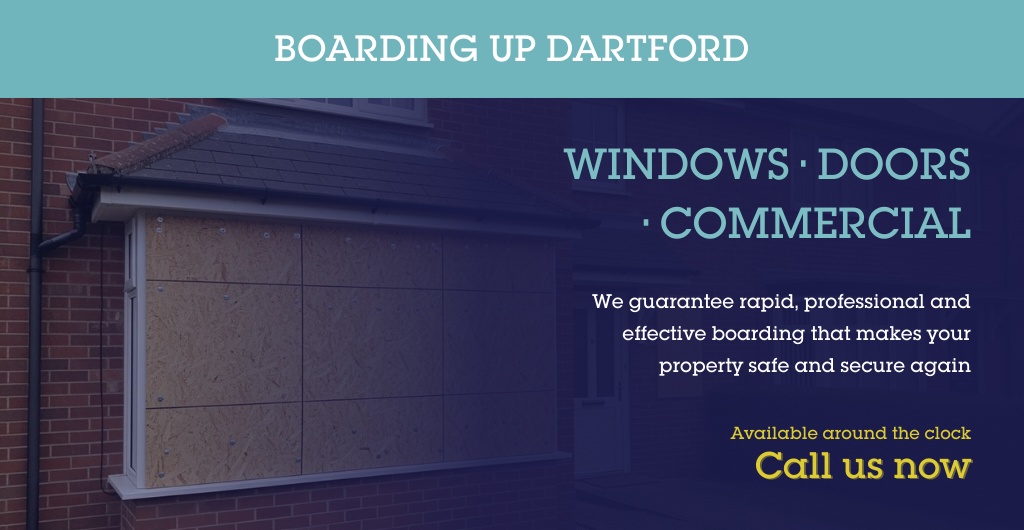
Boarding up isn’t just placing a sheet over broken glass. Done correctly, it’s a measured, secure installation that balances strength, safety, and minimal further damage.
A typical boarding-up job includes:
-
Assessment of the opening and surrounding frame
We check what has failed: glass only, beading, hinges, lock area, or the timber/uPVC frame itself. If the frame is too damaged for non-destructive fixing, we’ll explain options before proceeding. -
Selecting the right material and thickness
- 18mm exterior-grade plywood is commonly used for strong, reliable security on larger openings.
- 12mm OSB can be suitable for smaller, lower-risk openings where appropriate.
Material choice depends on size, exposure to weather, and whether the premises is occupied.
-
Fixing method based on security and structure
We use methods designed to resist outside tampering. Where needed, anti-tamper fixings help prevent removal from the street side—important if the property will be vacant or in a higher-risk location. -
Making safe and reducing hazards
We’ll address immediate risks like loose shards, unstable panels, or accessible openings—prioritising safety for occupants, neighbours, and passers-by. -
Documentation for your records/insurer
Where useful, we provide time-stamped photos, an itemised invoice, and a clear work statement (see the insurance section below).
If you already know what you need, you can go straight to service pages like window boarding in Dartford or door boarding up.
What areas of a property can be boarded up?
Boarding up is used to secure many types of openings, including:
- Windows (ground floor, upper floor, bays, side windows)
- Doors (front, rear, communal doors, side access doors)
- Shopfronts (large glazed panels, door-and-window combinations)
- Rooflights / skylights where safe access is possible
- Internal openings (occasionally used to isolate unsafe areas, depending on the incident)
For overhead or difficult access work, take a look at roof boarding. For retail and commercial glazing, see shopfront boarding.
Boarding up vs. other ways to secure a property
Boarding up is one tool in a broader “make-safe” approach. Depending on the building and how long it needs securing, we may recommend alternatives.
Temporary boarding (short-term security)
Best when you need immediate protection after damage and repairs will follow soon.
- Quick, robust, and cost-effective in many situations
- Ideal for broken glazing and forced entry damage
- Common for emergency call-outs and temporary boarding
Temporary steel doors (stronger door security)
If a door has been forced and the frame/lock area can’t be trusted, a temporary steel door can provide better medium-term security than timber boarding.
This is particularly useful for empty properties or repeated attempted break-ins. Ask about options when you call, or review door boarding up for context.
Security screens (longer-term protection for void properties)
For vacant buildings that will be unattended, a screen-style system can be preferable to repeated re-boarding.
If you’re securing an empty house or commercial unit between tenants, see vacant property boarding and we’ll talk through what’s appropriate.
What materials are used (and why)?
A trustworthy boarding-up service explains materials clearly, because the wrong board or poor fixing can create more problems than it solves.
We typically use:
- Exterior-grade plywood for strength and better weather resistance
Good for larger windows, doors, and commercial openings. - OSB (Oriented Strand Board) where suitable for smaller openings
A practical option in certain cases, depending on the risk level and exposure. - Anti-tamper fixings where boards could be targeted for removal
Especially relevant for street-facing openings and unoccupied buildings.
We’ll always consider:
- Opening size and shape
- Whether the building is occupied
- Weather exposure (wind-driven rain is a common issue after glazing fails)
- How long the boarding is likely to stay in place
To understand the service in more detail, see boarding up services or the explainer on pricing and cost factors.
Is boarding up covered by insurance?
Often, boarding up can be covered as part of an emergency make-safe following an insured event—but cover depends on your policy and circumstances. We’re not loss adjusters and can’t approve claims, but we can provide the documentation insurers typically request.
What we can provide to support a claim
- Time-stamped photos of the damage and the secured opening
- Itemised invoice (clear materials and labour)
- Work statement describing what was done and why (make-safe/security)
If you’re dealing with a claim, keep hold of:
- Your crime reference number (if police attended)
- Your insurer’s claim reference
- Any photos you took before work started (if safe to do so)
More guidance is available on our insurance claims help page.
How long does boarding up last?
Boarding up is designed as temporary security, not a final repair. How long it stays in place depends on:
- How quickly glazing/door repairs can be scheduled
- Whether the frame is structurally sound
- The property’s risk level and whether it’s occupied
- Weather conditions (especially for exposed openings)
If you expect a longer delay (for example, parts on order or a property awaiting probate/tenancy changes), tell us—there may be a better option than standard boarding for your situation.
What happens when you call us?
If you need help in Dartford or anywhere across DA1–DA18, we keep it straightforward:
-
Tell us what’s happened
We’ll ask what’s damaged (window, door, shopfront, roof), whether the property is occupied, and if there are any access issues. -
We give a realistic plan and ETA
We don’t quote guaranteed arrival times—traffic, workload, and the nature of emergencies vary. We prioritise urgent calls and aim to attend as quickly as possible. -
We secure the property and provide paperwork
Once the property is made safe, you receive documentation suitable for landlords, facilities teams, and many insurance claims.
If it’s urgent right now, use the dedicated 24/7 emergency boarding up page or call 01322 952 450.
Boarding up for homes vs. businesses (what’s different?)
Residential properties
In homes, boarding up is often about quick reassurance and safe access—especially after a break-in or smashed window at night. We’ll help you secure the opening and reduce immediate risk, then you can arrange glazing/repair separately.
Learn more on residential boarding up.
Commercial properties
For shops and offices, it’s usually about security, liability, and continuity—protecting stock, restricting access, and meeting site requirements.
If you manage a unit, restaurant, or office, see commercial boarding up and shopfront boarding.
Typical situations where boarding up is the right next step
Every incident is different, but boarding up is commonly used after:
- Burglary and forced entry (damaged doors, frames, windows)
- Vandalism (smashed glazing, repeated targeting)
- Storm damage (cracked panes, blown-in debris)
- Fire damage (property left insecure—note: we secure, not remediate smoke odours)
- Flood damage (swollen frames, compromised openings)
- Accident/impact damage (vehicle strikes, sudden breakage)
If you’re unsure which applies, contact us and we’ll talk it through.
FAQs about boarding up
Do you board up broken windows in Dartford?
Yes—if you need to board up broken window after a breakage, we can attend across Dartford and the DA postcodes to secure the opening with suitable boarding and fixings. For details, see window boarding in Dartford.
Can you board up a door after a break-in?
Yes. If the lock area or frame is compromised, boarding can prevent further entry attempts. In some cases, a temporary steel door is a better medium-term option—see door boarding up.
What if it happens out of hours?
We offer out of hours assistance. The priority is to make safe and secure the property so you’re not left exposed overnight. Use emergency boarding up for urgent help.
Is boarding up a permanent fix?
No—boarding up is temporary security. It’s designed to protect the property until proper repairs (like glazing replacement or door repairs) can be completed.
Will boarding up damage my window frame?
We aim to minimise additional damage by choosing suitable fixing points and methods. If the surrounding frame is already unsafe or too weakened, we’ll explain what’s possible before we proceed.
Can you board up a shopfront the same day?
Often, yes—subject to workload and the nature of the incident. We prioritise urgent commercial call-outs where a shopfront needs to be boarded up to protect stock and reduce risk. See shopfront boarding.
Do landlords and letting agents use boarding-up services?
They do. Boarding up is common for void periods, post-tenant damage, or after forced entry. For longer unattended periods, see vacant property boarding.
What information should I give you on the phone?
If you can, tell us:
- Whether it’s a window, door, shopfront, or roof opening
- Approximate size and floor level
- Whether the property is occupied
- Any access notes (gates, rear access, flats above shops)
- If police/fire service are attending or have attended
Helpful Links
- emergency boarding up
- pricing and cost factors
- insurance claims support
- window boarding in Dartford
- door boarding up
- shopfront boarding
- faqs
- contact us
Need help now? Call 01322 952 450 for immediate assistance. If it’s not urgent, you can also email info@boarding-up-dartford.co.uk.
